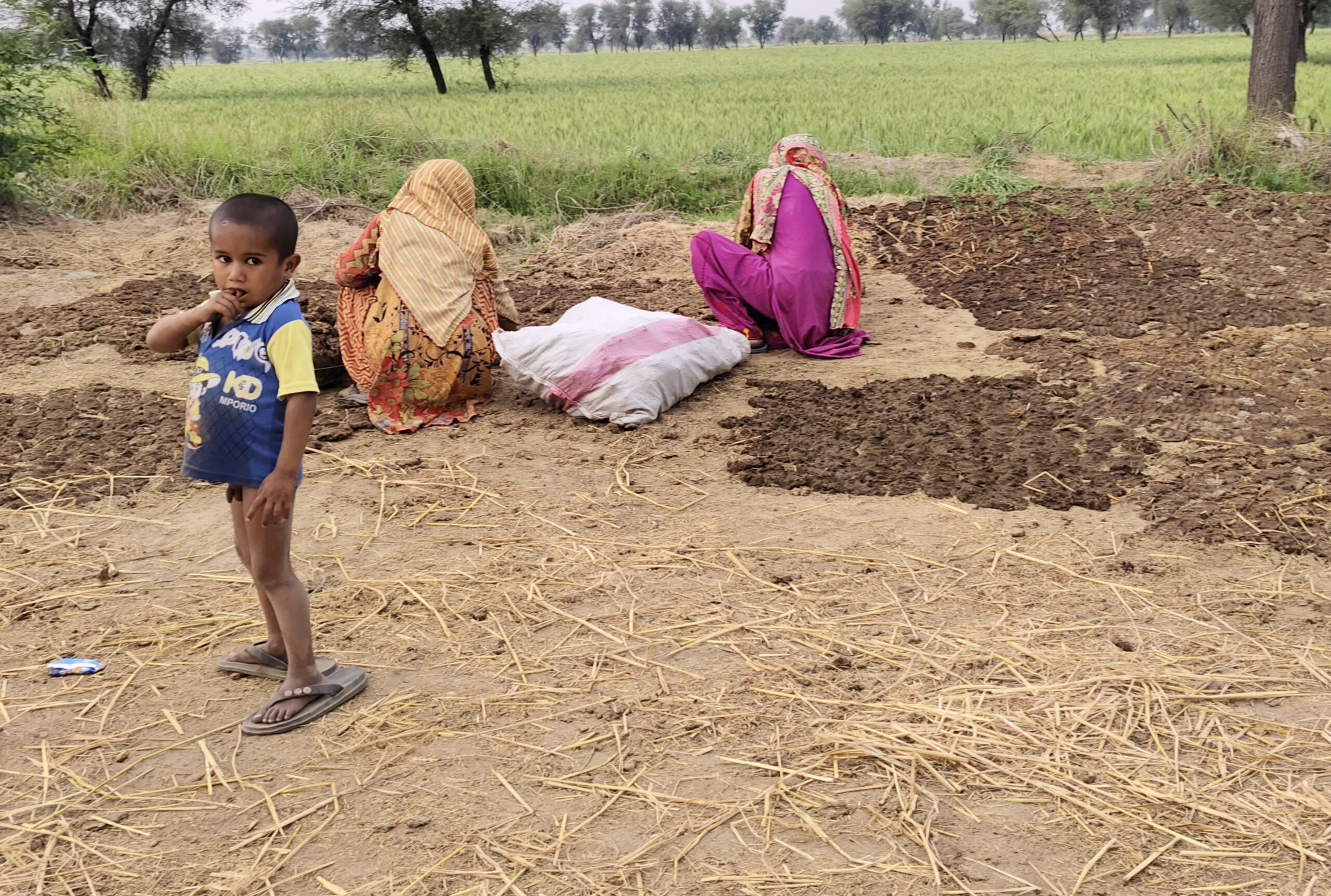
Call Kaccha “Womenistan”!
Have you ever wondered what Kaccha women do beyond honey traps? Are they only involved in honey trapping for the gang? Are they the decision-makers like the male members of the groups? Are they truly empowered to carry out honey traps? Do they receive a percentage of the ransom money? If yes, what do they do with it, and how do they use it in Kaccha, where there is hardly any market? If there are no markets, there would be no hospitals. How do they take care of their health needs, especially when they are pregnant? When I say Kaccha women, I mean the women who work or are part of the groups of the “bandits.” Two quick points for reference: I am using inverted commas for “bandits” because that’s what the police call them. Second, women who work as bandits or for bandit groups are mostly their family members. In few cases, it has been seen that a woman came to them to save herself from the “bandits of Pakka” to take amman—a traditional form of protection where the host is obligated to shield the person from harm.
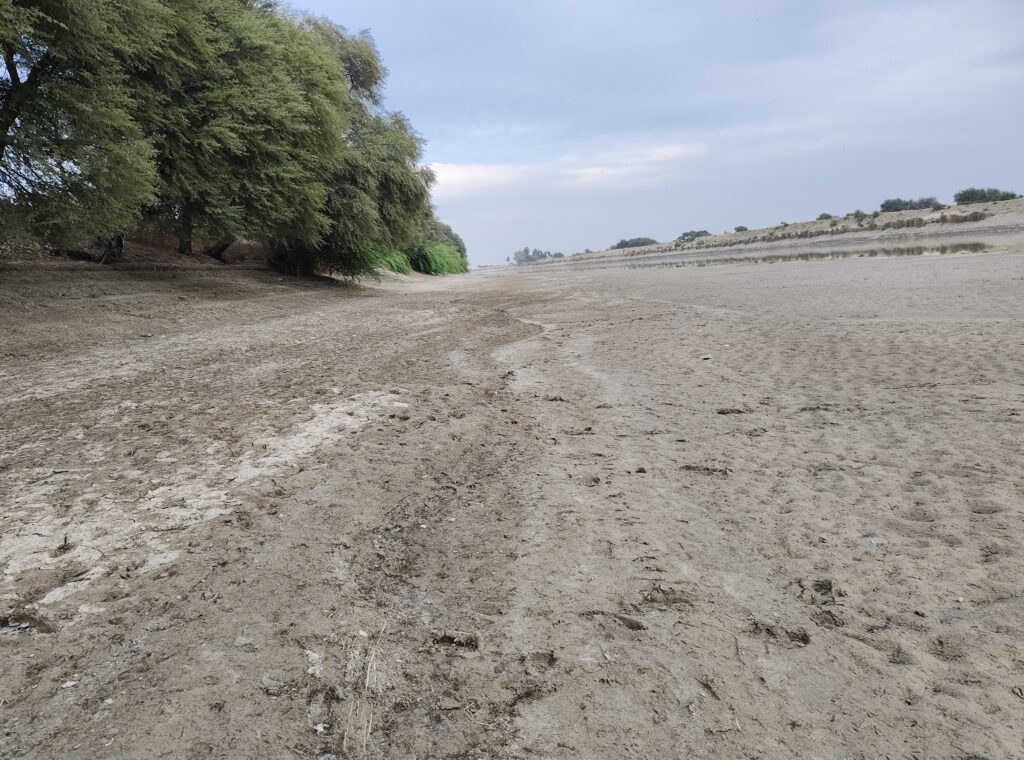
To understand the situation of women in Katcha, you need to understand Katcha first. Katcha is the land around the Indus River on both sides of the bank, which is considered the land of the river because it gets flooded in summer, when the water level rises. The land has no legal documentation – and is considered government-owned – but locally, the people living there cultivate the land by paying money to the locals and get ownership of the land through stamp papers.
In Katcha, There is no government road communication there, no government hospitals or schools in those lands, and no electricity. Only a few villages near Pakka—the developed, legally recognized land—have some of these facilities. Now, consider women living in such a situation. In rare cases, they have their male members living along with them, while in many cases, male members are in hiding owing to the legal cases against them in Police.
In this worst-case scenario, where there is nothing inside Kaccha, no one can survive without connecting themselves to Pakka. Women—the family women, not those who come to take refuge—are the source that make the male members survive in such a situation and are the only reason to make Kaccha fertile because the male members, or dozens of them, have bounties on them by the government.
Women are the ones who visit daily or every other day using local transport, which is mostly motorcycles and, in a few cases, old buses, leaving or picking up from the nearest populated area to Pakka. From there, they use boats to cross the small water channels of the river, called Chhanni in local terminology, to reach their houses. These women not only complete the daily use of rations and medical necessities but also deal with, and bring everything needed to cultivate the lands. They are the ones who bring millions of rupees to fertilizer and seed dealers, petrol pumps to get diesel for water pumping machines and tractors (now increasingly converted to solar-powered systems), deal with harvesters, bring them to Kaccha on their own responsibility, get the crop harvested, and then sell the crop back to the city areas, bringing the millions back to themselves.
The second major role of women is as transporters of armaments. Now, the question arises: Is Police aware of this? The answer is obviously Yes. In most cases, the Police themselves or their agents deal with the police to get the weapons across certain areas where required and give them safe passage. On the other hand, in few cases, women have been used to collect ransom amounts from the families of kidnapped victims. One such case of Ghotki, Sindh was reported and highlighted by the mainstream media in 2024, where a jeweller was arrested by the police who acted as a broker for a few gangs, and women used to come to give & take money from him.
The third major role of women is in the household, where she not only feeds and takes care of her kids but also builds infrastructure like homes, kitchens, washrooms, and boundary walls. When I talk about infrastructure, mostly houses where the females live are made of wood because, in the riverine area, there is less mud—you only find sand. Bringing hard infrastructure like bricks and iron is very tough to transport, so they use local jungle resources that exist in the river area to make environmental-friendly infrastructure. With this, they also take care of the livestock, although it is interesting to share that there are no boundary walls for livestock like you usually see in Pakka areas. Within Kaccha, they have an understanding developed doing no harm to each other’s properties, so livestock only needs to be checked for medical issues or given food—nothing else is needed or taken care of.
The fourth role, which is highlighted the most in mainstream and social media and, for the past two years, also in memes, is the honey trapping. There have been very few cases in which women from their own families have been used to honey trap. Most of the women seen involved in honey traps are those who came to take refuge with the groups. The SIM that these groups use are registered in female names—mostly the providers of such SIM are device owners from whom females used to get the Benazir Income Support Program’s amount. Also, in a few cases, the individuals who were already honey-trapped had their SIMs used to further honey trap others. Most of these calls are targeted, but there have been random cases.
In the last two years, social media has also been used to trap victims at the initial stage, followed by video calls and in-person meetings. Recently, it has been seen that sex workers in local districts have been used to honey trap. One such case involved a few high-profile honey trap incidents, the most recent being a doctor working in Gambat, Sindh. For this, one of the family members of a Pakka-based facilitator was used. She initially had in-person meetings in Gambat, Sukkur, and Rahim Yar Khan. Later, she invited him to see her in Kashmore, where he was kidnapped and asked for ransom. In most cases, the police have been seen to not take interest, but since this became a high-profile case, the Punjab Police acted, traced the facilitator and individuals involved, and recovered the doctor. The worst part of this case was that the police arrested extended family members, especially the females, among whom one was pregnant, living in Pakka areas. This happens in most such cases.
The fifth part of women’s engagement is when the law comes into action, or the pressure group puts pressure on the case. The first thing that has been seen in both cases is that the police either arrest the females and kids, bulldoze their houses (in which there are hardly a few things earned or made by the male members of the family), and put them in jail, or, in the worst case, these women, along with other female relatives, take the Quran to the police, local tribal leaders, or, in a few cases, to the victim’s family to seek forgiveness.
Now, from all the above cases, one thing that I can clearly say is that Katcha and the bandit groups are surviving only at the mercy of women who don’t have the choice to make a single decision for themselves. When we look at this in terms of empowerment, these women have access to cities, access to mobile phones, deal in millions, and do things that usually an independent woman doesn’t do in a metropolitan city—and we ask ourselves, are they really empowered? I leave this question to you because there have been shifts in the definition of women’s empowerment. There was a time when empowerment was linked to work remuneration, and it was believed that when women were given remuneration for their work, they became empowered. Then, after this, a time came where empowerment began to be seen as the freedom of choice—whatever a woman thinks is best for herself. And perhaps the definition will continue to change as the world changes. Or perhaps, these women will come to run a gang of their own, running a cartel – like recently released tv show on Netflix “Dabba Cartel” – redefining the empowerment and choice with a new approach.
The writer is a development sector professional and belongs to Kashmore.
Disclaimer
We have made every effort to ensure the accuracy of the text and content on this website. Individualland and Friedrich Naumann Foundation do not accept responsibility for any unintentional omissions. We appreciate accurate information to enhance our work. The articles on this website are supported by Friedrich Naumann Foundation for Freedom Pakistan, but the views expressed here do not necessarily represent the views of the Friedrich Naumann Foundation for Freedom.